.jpg)
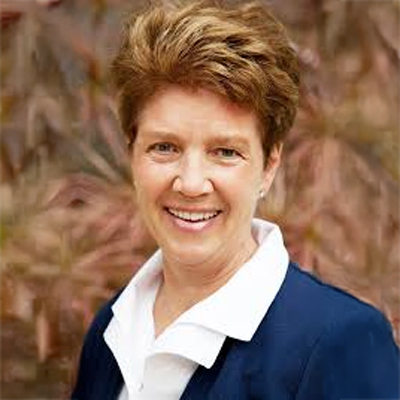
Editor’s note: The editorial team of The Script extends its deepest gratitude to Carol Solomon and Pamela Levin for this illuminating dialogue. Solomon’s vivid recollections of Eric Berne — ranging from his "psychotherapy store" to his quiet, bull's-eye confrontations — provide a rare and humanizing window into the man behind the theory. Her dedication to preserving Berne’s legacy through the UCSF Archive is a gift to the entire transactional analysis community. Special thanks go to guest editor Pamela Levin, whose insightful and rigorous questioning allowed these memories to surface with such clinical and personal depth. Through these essential conversations, the "heart and soul" of Berne’s work remains accessible and vibrant for a new generation of practitioners.
*
Pamela Levin: What was it about Eric that made you want to work with him?
Carol Solomon: I had gone to Carmel to spend a month at the Institute for the Study of Nonviolence, and it was then that I decided to move to California. Once there, I asked a trusted source for a referral to a therapist in the area, and she referred me to Eric Berne, who was her therapist at the time. He was strikingly different from the psychoanalytic psychologist I had seen in New York City. My New York therapist never spoke to me except to say “hello” and “see you next week.” I didn’t talk either.
I was a depressed 19-year-old when I first met Eric in 1966. Eric said, “What are you here for, and what do you want to get out of this?” I didn’t understand the question; I’d never been asked anything in the psychoanalytic setting. I thought Eric was being mean because he kept pushing me about that, and I didn’t have an answer. Finally, he said, “Look, I’m running a psychotherapy store. You’re coming here to buy something, so you have to tell me what it is you want.”
Early in my work with Dr. Berne, my father refused to pay for my therapy. My sister was hospitalized at the time for severe depression, and my father said he could not afford to pay for her hospital care as well as my therapy. I explained this to Dr. Berne and left that session quite dejected, but was surprised when he made an appointment for me the following week. When I sat down the next week, he opened the session by saying, “Well, your father has decided to pay for your therapy.”
He read me the letter he had written to my father. It said: “I am writing to ask you to pay for your daughter Carol’s therapy. She does not need to be hospitalized at this time.” I was shocked and responded by saying, “Of course I don’t need to be hospitalized!” And he said, “That’s right. I didn’t say anything that was not absolutely true.” (There are many ways to analyze this event, and it gives you a window into Eric’s way in the world. I’ll leave that to you.)
I worked with him individually and in a group for three years in Carmel. That was the best training I could have had in learning to be a therapist. He helped me resolve my depression and develop the confidence to go out into the world. I left therapy with him when I decided to go back to school to become a psychologist. Dr. Berne offered some advice about that decision, telling me not to get a Ph.D. but to go to medical school instead, and to become a psychiatrist. When I ended treatment with him in the spring of 1970, he invited me to come to the San Francisco TA Seminar the next fall. I was excited and on my way to being a TA therapist! But Eric died before the fall, and I never had the chance to learn from him in that setting.
Pamela Levin: Eric often talked about having fun. Did he have fun during sessions and groups? How did he use humor in your experience?
Carol Solomon: Eric didn’t talk as much as most therapists I know. He sat still, was very quiet and listened intently, sometimes with his eyes closed. But his confrontations were often funny — he’d point out what someone was doing in a way that made that patient and the entire group laugh because it was so strikingly true. When he did this, it was very specific to what that patient was doing at that moment: a bull's-eye transaction. Sometimes he would then draw a diagram showing what the transactions were. He knew he was funny, and he liked being funny. He would try not to laugh at his own observations but sometimes chuckled in spite of himself.
A lot of TA therapists are very Adult in the way they teach TA. Yes, Eric used his Adult ego state when he taught the basics of TA in his groups or in individual sessions. But he didn’t over-talk it or overanalyze the way so many current TA therapists seem to. His interventions were simple, clear and to the point.
Pamela Levin: As you worked with him, he was becoming world-famous with the international success of "Games People Play." How did that affect his work with you and others?
Carol Solomon: I didn’t know he was world-famous. I don’t think it affected him in the group work. Some people knew it, but he would simply nod and brush it aside.
Pamela Levin: You took on the incredible task of creating the Eric Berne Archive at the UCSF Library. What was it about Eric and TA that inspired you to take on that complex and amazing job?
Carol Solomon: My experience with Eric completely reshaped my life. Eric was like a father figure to me. He was very reserved, not demonstrative. I was the youngest person in the group, and Eric and others, following his lead, looked out for me. I had great affection and respect for him and learned so much through observing him.
Somewhere along the way, I met his daughter, Janice, very casually. When the family decided to sell the Carmel home, Janice called and asked me to come to Carmel and pack up the contents of her father’s study and store it for safekeeping. I collected eight boxes, which I put in my office, afraid that the dampness of my basement would destroy them. I started out thinking that the content of those boxes was private, but eventually, my curiosity got the best of me, and I peeked. There were papers, publications, grocery lists, receipts, professional letters, personal letters and more letters. The letters showed who he was and where he was coming from, apart from his professional self.
I knew that the papers and publications had historical significance. I was intrigued with the letters, which showed in great detail the story of his personal life. I believed that all of it was part of his legacy and thought it should be preserved and shared.
Pamela Levin: Dr. Solomon, Eric Berne held the pragmatic view that psychological language should be universally understood. As the author of accessible, foundational texts such as "Transactional Analysis Theory: The Basics," how do you see your role in continuing Berne’s legacy of translating transactional analysis theory for modern clients without compromising clinical depth?
Carol Solomon: The trouble, I think, is that people believe that when we speak simply, we’re compromising depth, but that is not true. What we say simply reaches the patients where they are, both experientially and intellectually. We can use very simple language to do that. Eric called it a bull's-eye transaction. If we speak very simply and accurately, we can engage all three ego states of the listener. When one speaks in complex terms, the patient may look as if they’re understanding, but they might be adapting or working hard to comprehend using their Adult ego state to the exclusion of their other ego states, and so not understanding on an emotional level.
Pamela Levin: Berne’s ego states form the structural foundation of personality in transactional analysis. Through your decades of clinical practice and global teaching, how have you seen the manifestation of these states — such as the Critical Parent or the Free Child — evolve in our contemporary, hyperconnected society, and has your personal approach expanded on Berne’s original structural model?
Carol Solomon: No, my personal approach has not changed. Some of the TA developments since Eric have required clients to stay in their Adult ego state, taking them out of their Child, which is where the change often needs to happen. Too many therapists have learned to intellectualize many aspects of their work. I believe they need to allow their own creative Child to see what is unfolding in front of them so that they can help the client with understanding feelings as well as learning theory that can be helpful to them.
Pamela Levin: Berne’s concept of psychological games focused on social transactions and stroke economy in a vastly different era. In your current clinical perspective, how does his game theory adapt to modern communication dynamics, such as social media and virtual workplaces? Are people playing new games today?
Carol Solomon: This is an interesting question. I have not thought a lot about it. I believe people can play the same psychological games via the internet, email or text. One difference is that people may have become more brazen in their game-playing as they feel hidden from view behind their screens. On the other hand, access to the internet and new learning and support groups can help many people get the strokes they need and feel more connected to others.
Pamela Levin: Berne emphasized the weight that early childhood decisions have on our life scripts. However, a core focus of your TA 101 teaching is adult empowerment and the capacity for redecision. What are the most effective tools in modern transactional analysis to help today’s clients rewrite the rigid scripts originally identified by Berne?
Carol Solomon: My post-Berne experience included many years of training with Bob and Mary Goulding. I believe that the concept of early decision and the practice of redecision therapy, as taught by the Gouldings, is a very effective means of change. The use of Gestalt techniques can be helpful in that endeavor, but they are not always necessary.
Pamela Levin: Eric Berne founded the International Transactional Analysis Association with scientific rigor and a forward-looking vision. As an active member who has trained professionals worldwide, how do you evaluate the scientific and clinical maturation of transactional analysis since Berne’s death in 1970, and where do you see the theory heading in the coming decades?
Carol Solomon: I think people have tried so desperately hard to make TA “official” and “professional,” wanting it to be accepted in the mainstream. Writings have become so much more intellectualized and psychoanalytic in their language. Even people who write in TA language have contributed very complex and often confusing supposed “advances” to TA theory, but that has taken away a lot of the heart and soul of what Eric was trying to do. His intention was to make TA and its theory and language accessible to the general public. Sadly, I believe that some of the “advances” in TA have often moved our theory in the opposite direction.
To ensure a productive and professional environment, we ask all members to adhere to the following principles:
🤝 Professional Courtesy
Engage with others respectfully. While debate is encouraged, personal attacks, aggressive language, and incivility are strictly prohibited. Focus on the topic, not the individual.
🎯 Constructive Contribution
Ensure your comments add value to the discussion. Avoid spam, off-topic remarks, or repetitive content. We prioritize quality discourse over volume.
🛡️ Safe Environment
Uphold the integrity of our community. Hate speech, discriminatory remarks, and harassment will result in immediate moderation. Help us maintain a secure space for all.





.jpg)









Lorem ipsum dolor sit amet, consectetur adipiscing elit. Suspendisse varius enim in eros elementum tristique. Duis cursus, mi quis viverra ornare, eros dolor interdum nulla, ut commodo diam libero vitae erat. Aenean faucibus nibh et justo cursus id rutrum lorem imperdiet. Nunc ut sem vitae risus tristique posuere.