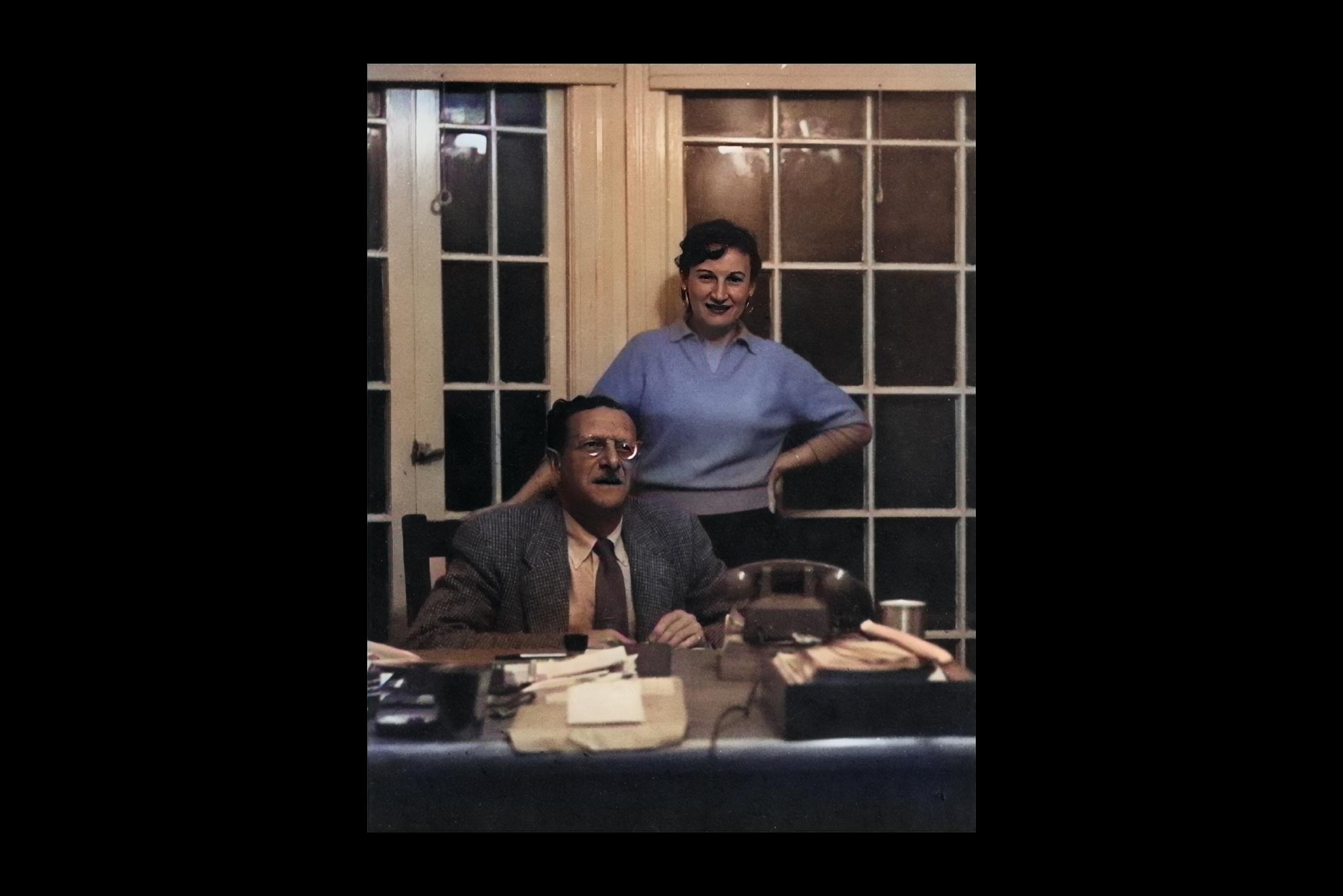
In What Do You Say After You Say Hello?, Eric Berne (1972/2018) describes how a parental injunction such as "Get locked up in a madhouse" may shape an entire family’s life trajectory. Different children enact the same script in different roles — some as patients, others as psychiatrists. For me, this is profound because it describes the same institution and family script, simply with different decisions about which side of the door to stand on.
I began working as a psychiatric social worker in 1993. Both my parents had experienced incarceration in psychiatric institutions or rehabilitation. Looking back, I see my father’s autism and my mother’s ADHD. Their neurodivergent difference is in my DNA and is inseparable from my professional advocacy. My father’s autistic difference went unrecognized, and he received electroconvulsive therapy repeatedly — a treatment identified as a possible contributing factor to his later motor neuron disease.
I lead with autistic ADHDer deliberately. For me, autism and ADHD are distinct neurological experiences. To name them separately honors that complexity rather than smoothing it into a single convenient label. This identity-first language marks the difference between a deficit narrative and a difference narrative. That reframe, made possible by the neurodiversity paradigm, allowed me to reinterpret years of shame as survival in a world not designed with me in mind.
Berne understood this before any of us had the language for it. His insistence that people are OK — not conditionally OK once they have been made to fit — is a neurodiversity paradigm waiting to be named.
Through Transactional Analysis (TA) supervision early in my career, I began to engage deeply with Berne’s work. What landed first was his ethical and philosophical stance: the radical insistence that every person has dignity, worth and the capacity to think. The goal of any meaningful therapeutic encounter is autonomy, which Berne defined as the release or recovery of awareness, spontaneity and intimacy.
In a 1990s psychiatric ward, these concepts were a direct challenge to the institution. Awareness meant living in the here and now. Spontaneity was the freedom from the compulsion to perform only system-approved feelings. Intimacy required game-free, genuine contact. In an environment organized around compliance and the expert-subject model, these capacities felt quietly revolutionary.
Games People Play (Berne, 1964) gave me a framework for understanding the transactions that kept people stuck. As Berne wrote, freedom gives people the power to carry out their own designs, while power gives the freedom to interfere with the designs of others. In psychiatric institutions, I witnessed that interference daily.
Berne’s (1949) early work on intuition resonates deeply. He defined intuition as knowledge acquired through sensory contact via preverbal unconscious functions. It operates beneath the analytical mind — something many neurodivergent people will recognize.
Berne was unequivocal: Everyone is endowed with intuition. He noted that in many important judgments, the fragile voice of intuition is a more reliable guide than logic alone. For neurodivergent people whose ways of knowing have often been pathologized, Berne’s work offers something profound. It names sensory and perceptual attunement as a form of intelligence to be cultured, offering a foundation for neuroaffirming practice grounded in relationship, presence and attunement. What autistic activists fight to have recognized as valid communication, Berne was already naming as intelligence in 1949.
Supported by Berne’s thinking, my supervisor and I strongly advocated for the voices of people experiencing mental distress to be centered in clinical ward meetings. The people being discussed had to be genuine participants in planning their own care.
Berne (1968) had argued for exactly this in a paper, describing a procedure where staff held professional conferences in the presence of patients. He found patients almost unanimously appreciative. When our ward rounds changed, the results were profound. People previously subjected to involuntary sectioning began developing advance care plans and choosing voluntary admission on their own terms. That is the difference between compliance and autonomy made real.
Today, as a clinical lead and psychotherapist working in therapeutic residential care, I am required to train in applied behavior analysis (ABA) and positive behavior support (PBS). These approaches often ask how to reduce the inconvenience of a person’s needs on resources, built on the same institutional logic that kept patients out of their own ward rounds.
Berne asked a different question: Does this psychological approach make life better for people? When I hold that question alongside behavioral approaches, I find myself uncomfortable. Berne’s inheritance invites us to resist interference when it is dressed in the language of help.
My neuroaffirming practice centers neurodivergent perspectives, resists deficit-based models and values autonomy. It aspires to be grounded in relational trust, resisting the notion that there is a single correct way to think, feel or communicate.
Berne’s inheritance finds contemporary resonance in frameworks emerging from neurodivergent-led research. Pavlopoulou’s (2021) lifeworld dimensions and McGreevy et al.’s (2024) experience-sensitive care propose relational dimensions that speak directly to Berne: insiderness over objectification, agency over passivity, uniqueness over homogenization and embodiment over disembodiment. Read together, these dimensions name what happens when the person is not in the room — and what becomes possible when they are.
None of this paradigm shift happened in a vacuum. It happened because a supervisor introduced me to Berne’s work when I most needed it. I was watching a system do to other people what it had done to my father.
Berne offered a framework and permission. He understood that intuitive, embodied knowing is an intelligence to be cultured, and that the person must always be in the room.
One child ended up as a patient. Another became the psychiatrist. I became the social worker who advocated for people to be heard in their own ward rounds. I did so because someone introduced me to a man who understood, long before the neurodiversity movement named it, that the problem was never the person.
It was always the room.
Berne, E. (1949). The nature of intuition. Psychiatric Quarterly, 23(2), 203–226.
Berne, E. (1964). Games people play: The psychology of human relationships. Grove Press.
Berne, E. (1968). Staff-patient staff conferences. American Journal of Psychiatry, 125(3), 286–293.
Berne, E. (1977). Intuition and ego states: The origins of transactional analysis. TA Press.
Berne, E. (2018). What do you say after you say hello? The psychology of human destiny. Corgi. (Original work published 1972).
McDonnell, A. (2022). Freedom from restraint and seclusion: The Studio 3 approach. Studio 3 Publications.
McGreevy, E., Quinn, A., Law, R., Botha, M., Evans, M., Rose, K., Moyse, R., Boyens, T., Matejko, M., & Pavlopoulou, G. (2024). An experience-sensitive approach to care with and for autistic children and young people in clinical services. Journal of Humanistic Psychology, 66(1), 107–133.
Pavlopoulou, G. (2021). A good night’s sleep: Learning about sleep from autistic adolescents’ personal accounts. Frontiers in Psychology, 11, Article 3597.
To ensure a productive and professional environment, we ask all members to adhere to the following principles:
🤝 Professional Courtesy
Engage with others respectfully. While debate is encouraged, personal attacks, aggressive language, and incivility are strictly prohibited. Focus on the topic, not the individual.
🎯 Constructive Contribution
Ensure your comments add value to the discussion. Avoid spam, off-topic remarks, or repetitive content. We prioritize quality discourse over volume.
🛡️ Safe Environment
Uphold the integrity of our community. Hate speech, discriminatory remarks, and harassment will result in immediate moderation. Help us maintain a secure space for all.





.jpg)










Lorem ipsum dolor sit amet, consectetur adipiscing elit. Suspendisse varius enim in eros elementum tristique. Duis cursus, mi quis viverra ornare, eros dolor interdum nulla, ut commodo diam libero vitae erat. Aenean faucibus nibh et justo cursus id rutrum lorem imperdiet. Nunc ut sem vitae risus tristique posuere.