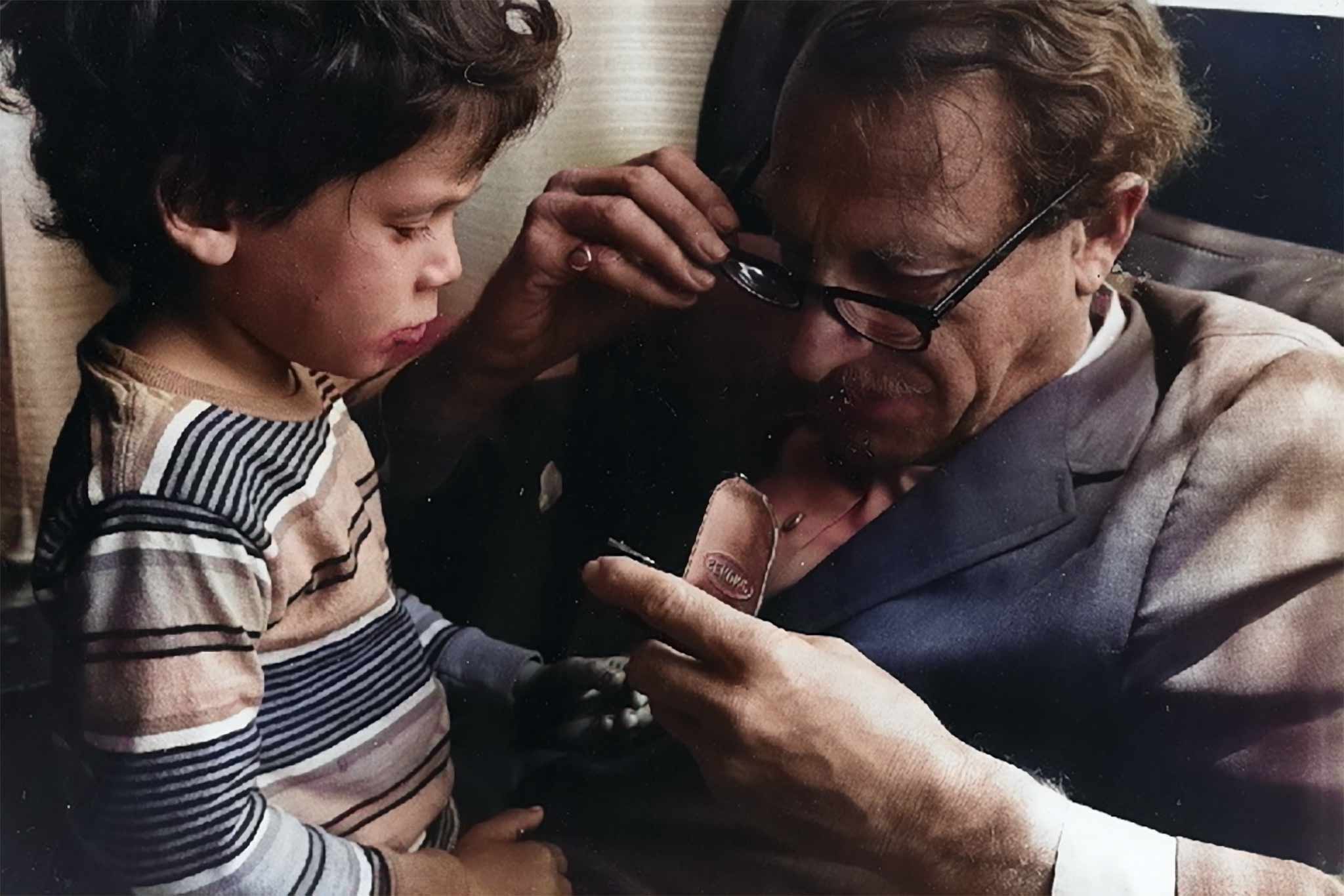
When I first began working with Eric Berne’s archival texts from the wartime period (Berne, 1945), I expected to encounter historical material. I anticipated something important, valuable, and professionally interesting, yet still belonging to another time. The context was the year 1945 at Fort Ord Hospital in California, involving psychiatric work with veterans returning from war. These texts represent some of the first clinical attempts to understand what happens to a person after a combat experience.
But as I read these texts, I had a completely different feeling. This was not only an archive. It was a voice speaking with remarkable precision to our present.
I read Berne as a scholar, a Candidate of Psychological Sciences, a lecturer at the Department of Clinical and Rehabilitation Psychology, and a member of the scientific group of the Ukrainian Association for Transactional Analysis (UATA). I am also a trainer and supervisor in the field of Transactional Analysis (TA). However, I also read him as a person from Ukraine, a country living under the conditions of a full-scale war. That is why many of his phrases, observations, and clinical intuitions are perceived today not as distant history, but as a professionally accurate description of what we see around us.
In his texts of 1945, Berne writes about veterans not in the language of pathologization, but in the language of respect. He does not reduce the person to a symptom, nor does he look at the soldier only through a diagnosis. He sees a person returning from an extreme experience who needs not stigma, pressure, or hasty normalization, but time, contact, safety, clarity, and a humane environment.
For me, this became one of the strongest discoveries. Berne already had the clinical ethics that are extremely important today for working with military personnel, veterans, their families, and a society experiencing war. His approach is built on respect for human dignity. It is as if he speaks to us in advance, advising us not to rush to explain a person through trauma or take away their subjectivity. He urges us not to turn their reactions into a sign of weakness, but instead to listen, stay present, and create the conditions for a gradual return to life.
I was especially struck by the way Berne describes the process of a veteran’s return to civilian life. He understands that a person does not return from war instantly. A physical return home does not yet mean a psychological return. A soldier may be near their family, in their city, and in a familiar space, but internally still remain in another reality. Their system of orientation, values, reactions, bodily alertness, and ways of perceiving danger may continue to belong to the experience of war for a long time.
For contemporary Ukraine, this is not a theoretical statement, but an everyday reality. We see military personnel returning to families, work, study, and social roles, while their inner return takes time. We see that families do not always understand why their loved one is already home, yet still cannot be the same as before. Society sometimes wants quick recovery, adaptation, and a return to functionality. However, Berne reminds us very precisely that the psyche needs time.
This idea is extremely important for TA. The method always works not only with behavior, but also with the inner logic of the person. It addresses their ego states, script decisions, and their way of seeing themselves, others, and the world. TA works with those inner responses that once helped them survive, but in new conditions may begin to interfere with living.
In this sense, Berne’s early texts about veterans allow us to see the origins of future TA. There is not yet a fully developed theory of ego states in the form in which we know it today. However, the essential elements are already present: respect for the person, attention to contact, and recognition of the importance of the social environment. There is also an understanding of adaptation, sensitivity to the client’s inner reality, and the therapist’s deep ethical position.
Berne sees that helping a veteran cannot be only a medical procedure. It requires the participation of a wider human environment, including family, community, professionals, educators, and social workers. Today, we would call this an interdisciplinary approach, psychosocial support, and a rehabilitation system, but this idea is already present in his texts. He understands that a person returns not to the therapist’s office, but to life, and life itself must become the space where gradual recovery becomes possible.
For me, as a university lecturer, this has special significance. We teach future psychologists to work not only with techniques and protocols, but with the person and their lived experience. They must learn to focus not only on an isolated symptom, but on the broader context of life, war, loss, return, relationships, and dignity. That is why Berne is needed today not only by psychotherapists, but also by psychology students, lecturers, supervisors, researchers, and professionals in the field of rehabilitation.
When I was working on two scientific articles devoted to the analysis of Berne’s archival materials (Berne, 1945), I could not escape a sense of amazement. His clinical advice, way of thinking, ethical principles, and practical algorithms of action remain strikingly contemporary. They have not lost their strength; on the contrary, in wartime, they have gained new sharpness.
Perhaps this is precisely where Eric Berne’s greatness lies. He created not only a theory, but he left us a way of seeing the human being. He viewed a person not as a carrier of a problem, but as a personality striving for contact, meaning, autonomy, and recovery. Berne saw a story behind the symptom, a need for safety behind a defensive reaction, lived experience behind silence, and the possibility of returning to connection behind alienation.
Today, as Ukraine goes through the experience of war, loss, wounds, displacement, the return of military personnel, and the transformation of entire families, we need exactly this kind of humanistic and structured approach. We need TA not as a set of concepts, but as a living professional language for understanding the person under conditions of excessive strain.
For me, Berne today is not only the founder of the method, but a conversation partner in a difficult professional and human time. His 1945 texts remind us that even after war, a person is not broken. They may be exhausted, disoriented, traumatized, and confused, but they remain a person with dignity, a history, a capacity for contact, and a potential for recovery.
This is exactly what I want to convey to the international TA community. Berne’s archive today speaks not only about the past, but it speaks about Ukraine. It speaks about our military personnel and the families who wait and welcome them home. Furthermore, it speaks about psychologists working in wartime, students learning to help in a new historical reality, and a society that needs not only survival, but also the restoration of humanity.
That is why the study of Berne must continue. It is crucial not only for the history of TA, but for our contemporary clinical, educational, and humanistic practice. His voice from 1945 sounds very close today, and we in Ukraine hear it.
Berne, E. L. (1945). [Archival documents and manuscripts]. Eric L. Berne papers, 1933-1971 (MSS 98-43). Archives and Special Collections, University of California, San Francisco Library.
To ensure a productive and professional environment, we ask all members to adhere to the following principles:
🤝 Professional Courtesy
Engage with others respectfully. While debate is encouraged, personal attacks, aggressive language, and incivility are strictly prohibited. Focus on the topic, not the individual.
🎯 Constructive Contribution
Ensure your comments add value to the discussion. Avoid spam, off-topic remarks, or repetitive content. We prioritize quality discourse over volume.
🛡️ Safe Environment
Uphold the integrity of our community. Hate speech, discriminatory remarks, and harassment will result in immediate moderation. Help us maintain a secure space for all.





.jpg)








Lorem ipsum dolor sit amet, consectetur adipiscing elit. Suspendisse varius enim in eros elementum tristique. Duis cursus, mi quis viverra ornare, eros dolor interdum nulla, ut commodo diam libero vitae erat. Aenean faucibus nibh et justo cursus id rutrum lorem imperdiet. Nunc ut sem vitae risus tristique posuere.