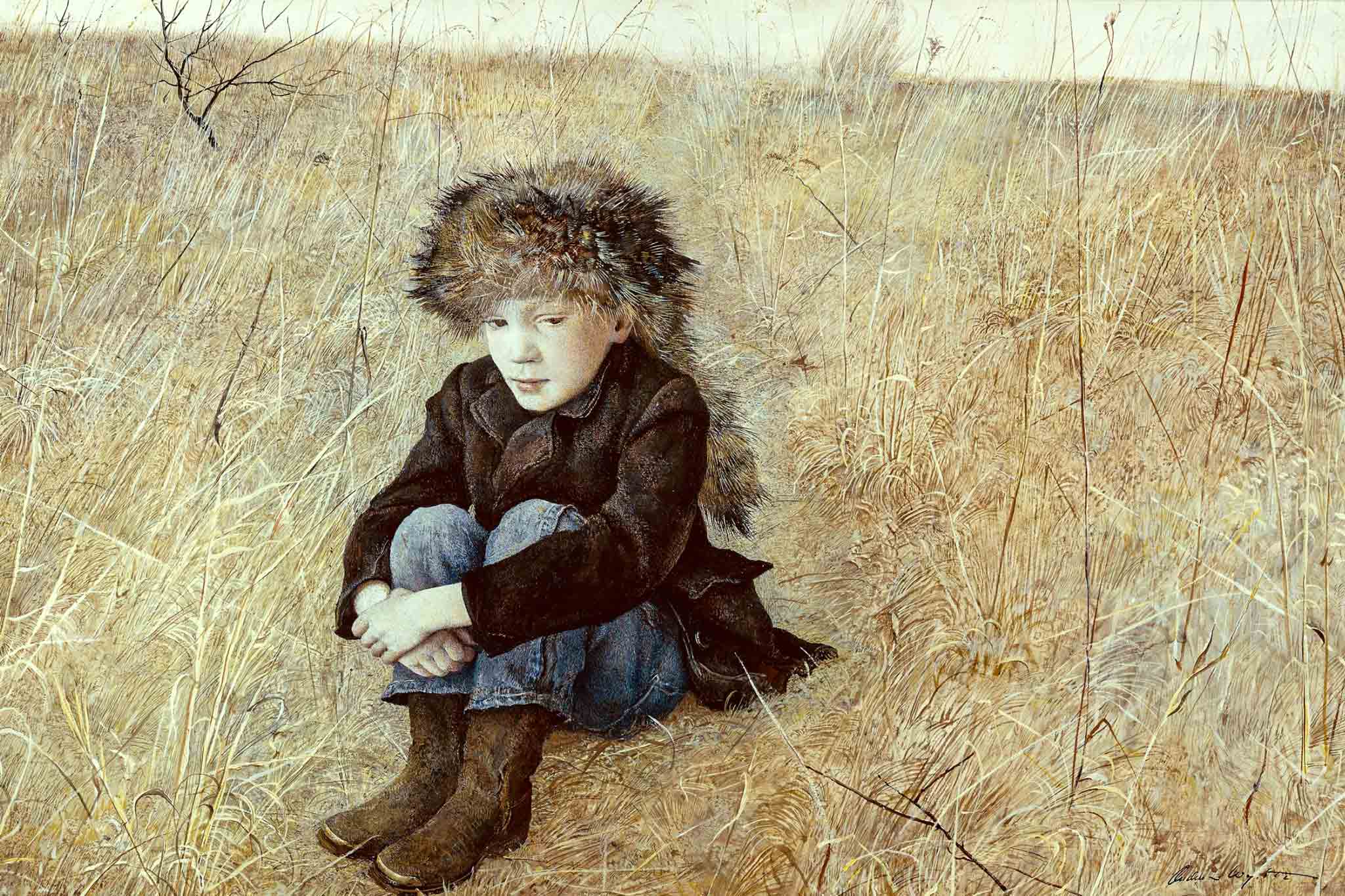
What is the "Inner Child1?" Most definitions describe the parts of ourselves that hold emotions and memories but often exclude the physical dimension. This is a crucial omission. Childhood is not only when our psyches form, but also when our physical bodies develop, mature, and learn to function in the world.
During these formative years, we master fundamental survival skills: how to receive nourishment, crawl, walk, talk, and coordinate the complex interplay of muscles, organs, and systems that sustain our lives. These early programs shape our adult physiology just as profoundly as they shape our psychology.
Unlike most mammals that complete their growth before birth, humans continue to mature for years afterward. Reaching neurological and physical maturity requires us to construct essential pathways through experience, creating what scientists call our "extra-genetic" learning system (Montague, 1981). This individually constructed system is the collection of operating instructions that each of us creates during these critical foundational stages.
While we are born with hard-wired reflexes that control breathing and swallowing, we must integrate these reflexes with one another and with other bodily functions and systems by carrying out developmental tasks after birth.
This collection of individually written imprints becomes deeply embedded directions. Later, they quietly govern countless automatic functions, from metabolism and movement to emotional expression and behavior. We do not have to think about the process of getting a hand to the mouth or how to walk, because the foundational instructions we wrote in childhood run them automatically.
Learning to hold a spoon, express emotion, or seek comfort are not purely psychological acts; they become embedded in our physiology and reflexes. They are internalized scripts2 we authored in childhood that persist into adulthood, guiding our physical and behavioral responses long after we created them3.
We construct these imprinted instructions through three intertwined sources: our genetically programmed childhood growth stages, our interactions with the environment, and the dynamic influence of the parent-child bond that integrates the first two (Levin, 2024, p. 26).
When, due to circumstances like abuse or neglect, we could not author these instructions in accordance with our inherited design, they can misdirect our body’s innate intelligence. This works against our inherited nature and can set the stage for physical symptoms in later life.
Imprinted instructions written under these circumstances contain three additional components: a strong emotional charge, a decision not to carry out a developmental task, and a defensive strategy built for protection (Levin, 2024, p. 26). The evidence for this becomes visible in people seeking healing.
Consider a nurse battling rapidly worsening rheumatoid arthritis. During therapeutic work, she allowed her Inner Child to stop being the "good girl" and instead express long-suppressed rage at her mother who had demanded caretaking from her young daughter. This release of a strong emotional charge led to an improvement in both her physical symptoms and her lab results.
A young physician exploring her Inner Child found that a very young part of her had learned to suppress her natural call for comfort and support. This inhibition, a failure to carry out a crucial infant developmental task, was now expressed physically in her herniated disc.
An Air Force pilot diagnosed with Hodgkin’s lymphoma discovered his career choice was not his authentic path but an obedient adaptation to parental expectations—a defensive strategy built for self-protection. As he reconnected with the deep layers of his Inner Child that had survived by conforming, he transformed both his health and his life’s direction.
Each of these individuals had to cope with difficult developmental challenges in childhood. In doing the best they could under the circumstances, they unwittingly authored the instructions for their physical symptoms in later life.
Their stories illustrate how the imprints the Inner Child writes can underlie a wide range of conditions, including asthma, high blood pressure, chronic fatigue, migraines, hypoglycemia, and thyroid issues. The attempts a developing child makes to survive in untenable circumstances set the stage for these and other health challenges in adulthood.
Thus, our "Inner Child" is far more than an emotional memory. It is a physical reality encoded in the very organization of our bodies, contained in the "soft wiring" that directs our neurology and physiology long after childhood ends.
This is good news, as it means that by healing our Inner Child, we can rewrite not only our emotional patterns but also the bodily instructions that contribute to or even cause our health challenges. We can rewrite the script for physical illness.
For this reason, the term "Inner Child" must include these deeply learned physical and behavioral patterns. Understanding this truth allows Transactional Analysis (TA) therapists to view contracts for resolving physical symptoms as just as valid as those addressing emotional or behavioral changes.
1. Psychologist Carl Jung is credited with originating this concept when he described the “divine child” archetype. See Jung, C. G., & Kerényi, C. (1969). Essays on a science of mythology: The myth of the divine child and the mysteries of Eleusis. Princeton University Press. (Original work published 1941). Eric Berne developed this concept further, describing internal ego states, where the Child ego state carries feelings, spontaneity, and early emotional experiences.
2. The concept of internalized scripts was developed by Eric Berne. See Berne, E. (1961). Transactional analysis in psychotherapy: A systematic individual and social psychiatry. Grove Press.
3. This process was presented in Levin, P. (2024). Mind as medicine: How to discover and transform hidden imprints behind physical symptoms. The Nourishing Company.
Levin, P. (2024). Mind as medicine: How to discover and transform hidden imprints behind physical symptoms. The Nourishing Company.
Montague, A. (1981). Growing young. Bergin & Garvey.
To ensure a productive and professional environment, we ask all members to adhere to the following principles:
🤝 Professional Courtesy
Engage with others respectfully. While debate is encouraged, personal attacks, aggressive language, and incivility are strictly prohibited. Focus on the topic, not the individual.
🎯 Constructive Contribution
Ensure your comments add value to the discussion. Avoid spam, off-topic remarks, or repetitive content. We prioritize quality discourse over volume.
🛡️ Safe Environment
Uphold the integrity of our community. Hate speech, discriminatory remarks, and harassment will result in immediate moderation. Help us maintain a secure space for all.




.jpg)











Lorem ipsum dolor sit amet, consectetur adipiscing elit. Suspendisse varius enim in eros elementum tristique. Duis cursus, mi quis viverra ornare, eros dolor interdum nulla, ut commodo diam libero vitae erat. Aenean faucibus nibh et justo cursus id rutrum lorem imperdiet. Nunc ut sem vitae risus tristique posuere.