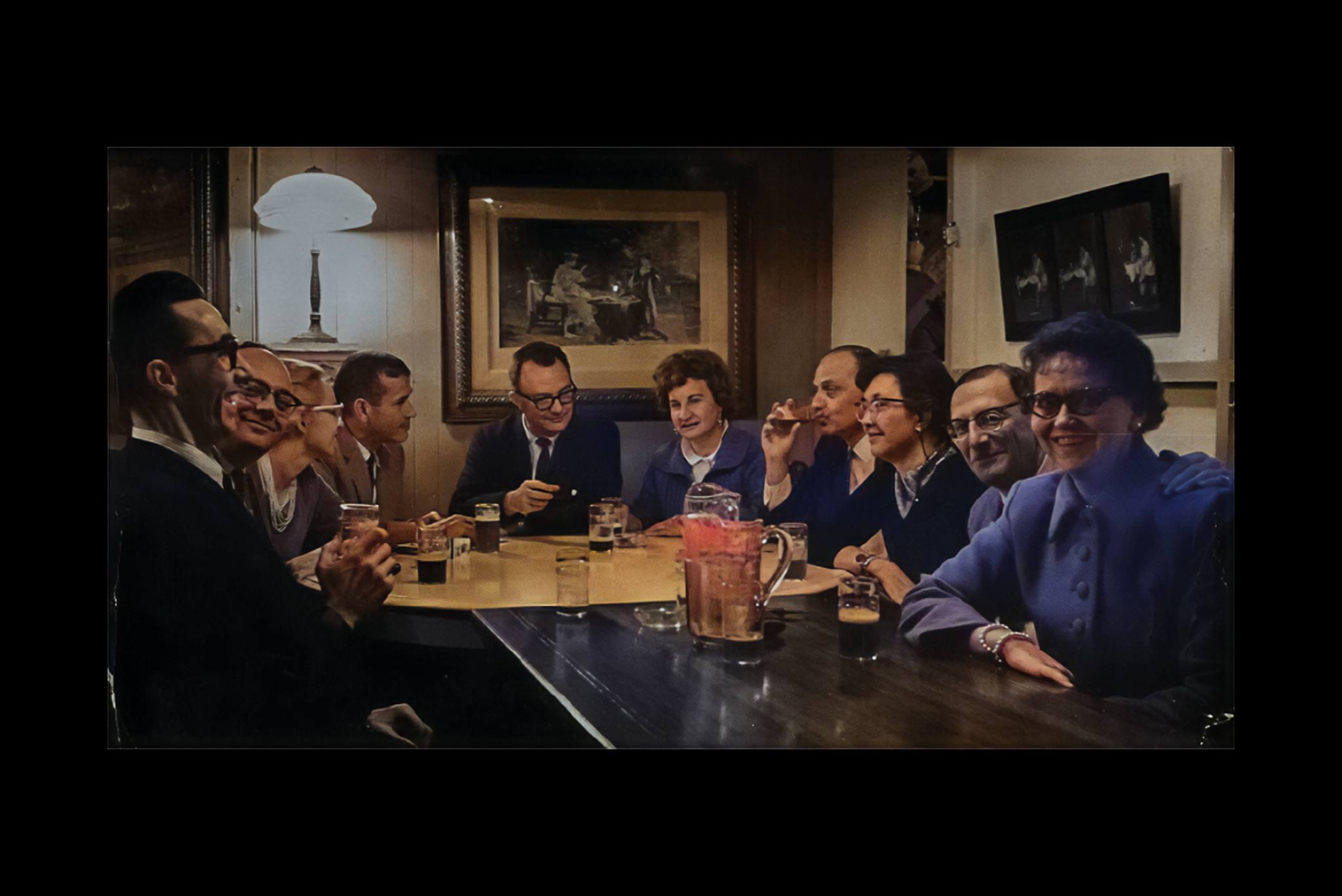
When I picked up my pen to write something on this theme, the first thought that popped into my mind was how great Eric Berne is. The school of thought he founded, Transactional Analysis, is the most suitable psychological framework for explaining communication. It can be used in psychotherapy, as well as in organizational management, education and training, bringing about change for ordinary people.
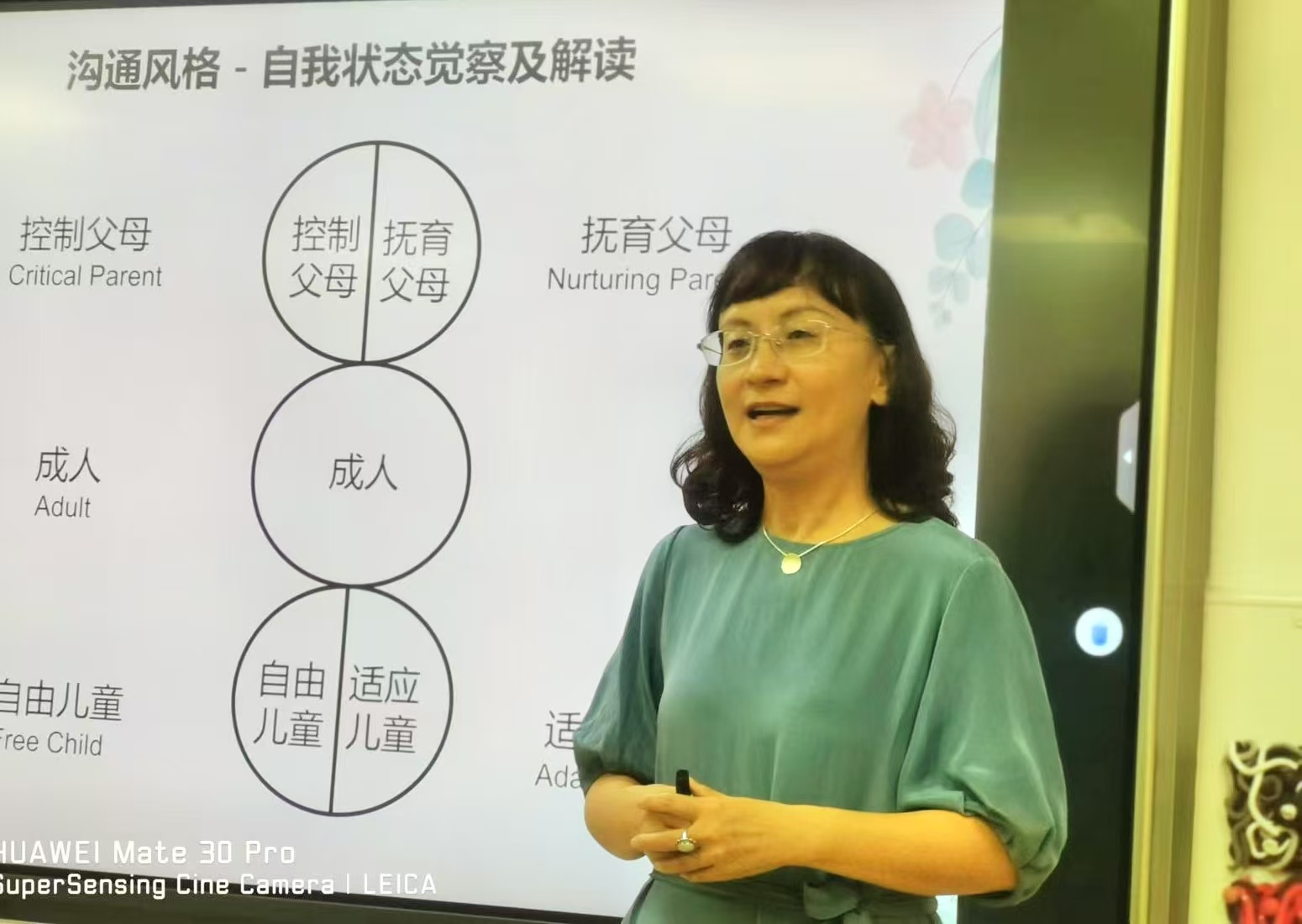
I left my job at a foreign company and started my own business in 2010. Then, by chance, I met Thomas Ohlsson1, which opened the door to systematic TA training. For me, this was a new career path. I founded the China TA Association, organized professional TA training, refined certification standards and carried out more TA promotion activities.
Over these 15 years, my colleagues and I have collaborated with teachers from different countries, focusing on one thing: helping TA take root in mainland China and blossom further.
I first met Ohlsson in the spring of 2011 at the ruins of the Old Summer Palace, or Yuanmingyuan, in Beijing. At the end of that meeting, I had no idea that we would embark on 15 years of cooperation, jointly launching systematic TA training and promoting TA applications across mainland China. From the tree-lined paths of Yuanmingyuan to TA classrooms in many cities across the country, we gradually built a localized training system, promoted Chinese TA books and established certification standards. After each course, seeing the enthusiasm shining in the students' eyes reaffirmed my belief: Berne's ideas are not a foreign import, but a living wisdom that has taken root and flourished on Chinese soil. To date, four of Berne's books have been translated and published in mainland China, with "Games People Play," "What Do You Say After You Say Hello?" and "Transactional Analysis in Psychotherapy" having a profound impact on people.
For me personally, these 15 years have been a very important chapter in my life. TA has accompanied me through changes in my family — my daughter from her first years of elementary school through college graduation and studying abroad. TA has been there with me through her turbulent adolescence and the passing of my beloved father. TA has given me tremendous support.
During my interactions with my teenage daughter, based on the life position, the ability to switch ego states quickly made us realize that we have choices in communication; we don't have to get stuck at any one point.
When facing my father's illness and eventual passing, the company of family and friends offered me immense comfort and support. Those genuine acts of help and companionship, those long phone calls, the memories and the tears — they soothed my anxious heart and helped me through that difficult and painful time. The "stroke" is the warmest concept in Berne's TA school, giving us uplifting power in interpersonal interactions.
In 2017, I unexpectedly fell seriously ill, was admitted to the intensive care unit and had a brush with death. Not long after being discharged, I returned to Ohlsson's TA101 class. It happened to be my birthday. Seeing my teacher and friends again after so long filled me with joy. My partner, Xu Lili, had prepared a birthday cake. Ohlsson brought me a gift, gave me a big hug and welcomed me back to the real world. That moment, surrounded by love, was deeply moving. It has been these warm, successive moments that have sustained me and kept me going.
TA has helped me better understand the meaning of communication and connection and the positive influence of life scripts, and it has enriched the journey of life. That is what Berne means to me.
I once participated in a study group for new students organized by the association. One student shared the changes she had experienced during the reading group sessions. Her husband had asked her to go downstairs and attend to their child. Previously, she would have immediately left the reading group to take care of the child, as she was not used to saying no, fearing he would be angry or that it would damage their relationship. But this time, she changed. Using the ego state theory she had learned, she activated her Adult ego state and expressed herself: "This is the only hour a week I have to read this TA book. I don't want to be interrupted. You should take responsibility for yourselves." The problem was solved, and her husband didn't get angry as she had feared.
Everyone listened to her story and gave her warm applause because she had learned to express herself, gained the courage to say no and protected her own boundaries. That is the power of TA. They expressed their emotions authentically and mobilized appropriate ego states to handle problems in relationships. This little story is just one example among many students.
I also recall a student who, two years after completing her training, sent me a text message late one night. She said, "Teacher Chen, I am especially grateful to you for organizing the TA training. The concept of time structuring, which Thomas taught us as Berne's original idea, has given me a much deeper understanding of the clients who come to my consulting room!" I was very moved when I heard that. TA is like a magical seed; it can unexpectedly open a window, helping students understand the world and the clients sitting beside them.
I think that is what Berne means to the students.
Berne created TA, and more than five decades after his death, TA continues to develop, with new perspectives emerging, and it is still being used by people around the world. It has transcended geographical and linguistic boundaries. Through the efforts of several generations, it still radiates vibrant vitality, helping countless people discover themselves and become better versions of who they are.
1. Thomas Ohlsson is a Teaching and Supervising Transactional Analyst (TSTA) from Sweden who has been teaching TA in mainland China since 2005.
To ensure a productive and professional environment, we ask all members to adhere to the following principles:
🤝 Professional Courtesy
Engage with others respectfully. While debate is encouraged, personal attacks, aggressive language, and incivility are strictly prohibited. Focus on the topic, not the individual.
🎯 Constructive Contribution
Ensure your comments add value to the discussion. Avoid spam, off-topic remarks, or repetitive content. We prioritize quality discourse over volume.
🛡️ Safe Environment
Uphold the integrity of our community. Hate speech, discriminatory remarks, and harassment will result in immediate moderation. Help us maintain a secure space for all.





.jpg)








Lorem ipsum dolor sit amet, consectetur adipiscing elit. Suspendisse varius enim in eros elementum tristique. Duis cursus, mi quis viverra ornare, eros dolor interdum nulla, ut commodo diam libero vitae erat. Aenean faucibus nibh et justo cursus id rutrum lorem imperdiet. Nunc ut sem vitae risus tristique posuere.