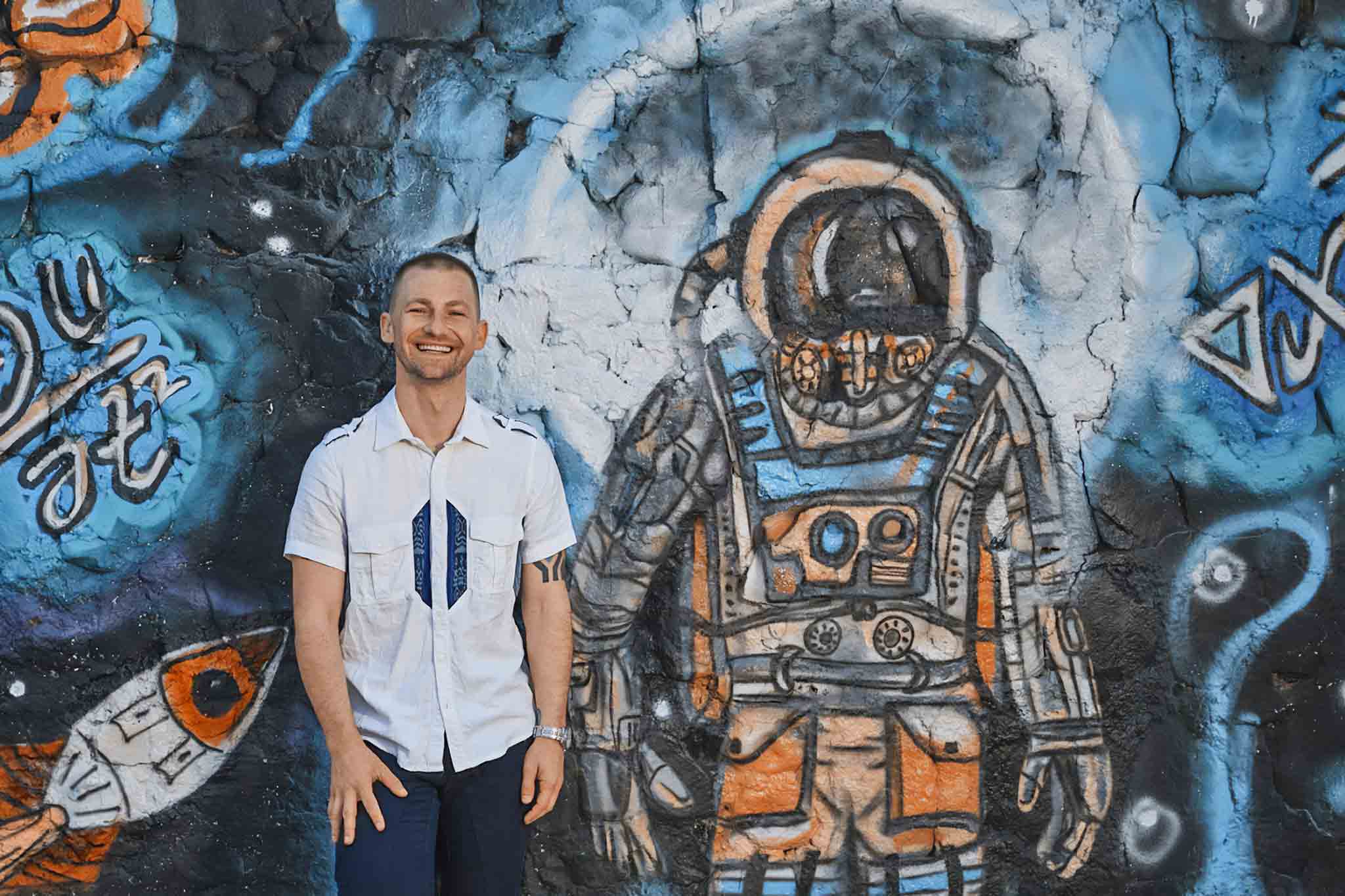
Many colleagues often express their appreciation for the international nature of Transactional Analysis (TA), noting how they have made many friends around the world. We are very much interconnected and feel proud of the vitality of our global community.
This is not by chance; various people are working behind the scenes to ensure that the International Transactional Analysis Association (ITAA) grows further in congruence, potency, impact, and inclusivity. Over the last four years, I have had the opportunity to collaborate with my dear colleagues at the Social Engagement Committee (SEC)—which was previously chaired by Gunther Mohr and currently by Sashi Chandran—Michelle Thomé, Luca Fornari, Vanessa Williams, and Marguerite Sacco.
As a team, we had a blast. Otherwise, I would not have been so eager to attend those 6 a.m. meetings as the roosters in Guatemala announced the start of the day. In the following piece, I would like to share some of my experiences at the SEC, which, in my mind, illustrate the creative and transformative potential of TA as a living system.
The aim of the SEC is to encourage sustainability and social justice as integral aspects of our personal and ethical choices. In simple terms, it is about thinking globally and acting locally. I cannot express enough how much thought has been given among us to invite pertinent reflection.
This process involved allowing ourselves to be consciously disturbed and translating that disturbance into thoughtful actions. Over the last few years, we have proactively explored the theme of avoidance and engagement in a disturbed world, offering webinars to the members of the ITAA. Starting from the micro and moving to the macro, we meticulously peeled away various layers of personal, political, and social narratives, looking at and sensing their interconnected nature.
By sowing the seeds of engagement, we first invited an exploration of the private self, then the professional self, and finally the community self. These were not just clever discussions but embodied, candid, and generative encounters.
Our formula was anything but prescriptive, emphasizing dialogue, vulnerability, and respect. The main premise was to create conditions where multiple points of view could be held.
For example, colleagues of color spoke about their experiences of exclusion, lesbian, gay, bisexual, and transgender (LGBT) individuals discussed not feeling mirrored in society, and white-skinned participants expressed their awareness of benefiting from a globally unjust system while also highlighting tokenism and reductionism. As I write these words, I am cognizant of the sweeping generalizations that might percolate from such simplistic statements.
This is precisely the kind of process the SEC encourages: giving voice to a wide array of viewpoints to account for the many pieces of the cultural, political, and social jigsaw that can easily lead to mindless and unethical actions unless thoroughly investigated. By holding a space of care and challenge, the SEC webinars facilitated mutual witnessing and inquiry that enabled attendees to feel a connection to the invisible threads that run between ITAA members through friendships, disagreements, cheeky WhatsApp messages, and serious ethical responsibilities.
My personal experience was one of belonging to a group of colleagues with similar values and a zest for life, while also internally noting my shadow and that of the TA community. As I connected to our monthly meetings from Guatemala, Mexico, the UK, or Poland, I was often met with a surprised and incredulous look asking, "Okay, and where are you now?"
On my side, I had to dispel the mental fog of an early morning meeting or attempt to play Tetris with time zones, realizing that life and every moment is essentially finite. On the surface, it was about logistics. More deeply, however, I felt some incongruence in jet-setting around the world in my usual way while taking part in meetings that promote social justice.
A number of questions arose: Is this my guilt and unintegrated aspects of my script speaking? Am I too radical and possibly self-critical? How do I make sense of belonging to a trans-territorial matrix of privilege while adhering to our "I'm OK–You're OK" mantra? To what extent is this a Child ego state fantasy that TA can indeed have a global, measurable, and sustainable impact?
Belonging to the SEC has certainly stimulated me to investigate my role in the world, awakening me to the complexity of social phenomena while also leaving me slightly, and appropriately, disturbed.
As I close this chapter, I look forward to more local initiatives and face-to-face meetings to translate the global into the local. I know in my heart that our TA community is full of people who care, who think and feel deeply, acknowledging their contribution and taking accountability for their part in the co-creation of the global system.
To ensure a productive and professional environment, we ask all members to adhere to the following principles:
🤝 Professional Courtesy
Engage with others respectfully. While debate is encouraged, personal attacks, aggressive language, and incivility are strictly prohibited. Focus on the topic, not the individual.
🎯 Constructive Contribution
Ensure your comments add value to the discussion. Avoid spam, off-topic remarks, or repetitive content. We prioritize quality discourse over volume.
🛡️ Safe Environment
Uphold the integrity of our community. Hate speech, discriminatory remarks, and harassment will result in immediate moderation. Help us maintain a secure space for all.




.jpg)








Lorem ipsum dolor sit amet, consectetur adipiscing elit. Suspendisse varius enim in eros elementum tristique. Duis cursus, mi quis viverra ornare, eros dolor interdum nulla, ut commodo diam libero vitae erat. Aenean faucibus nibh et justo cursus id rutrum lorem imperdiet. Nunc ut sem vitae risus tristique posuere.