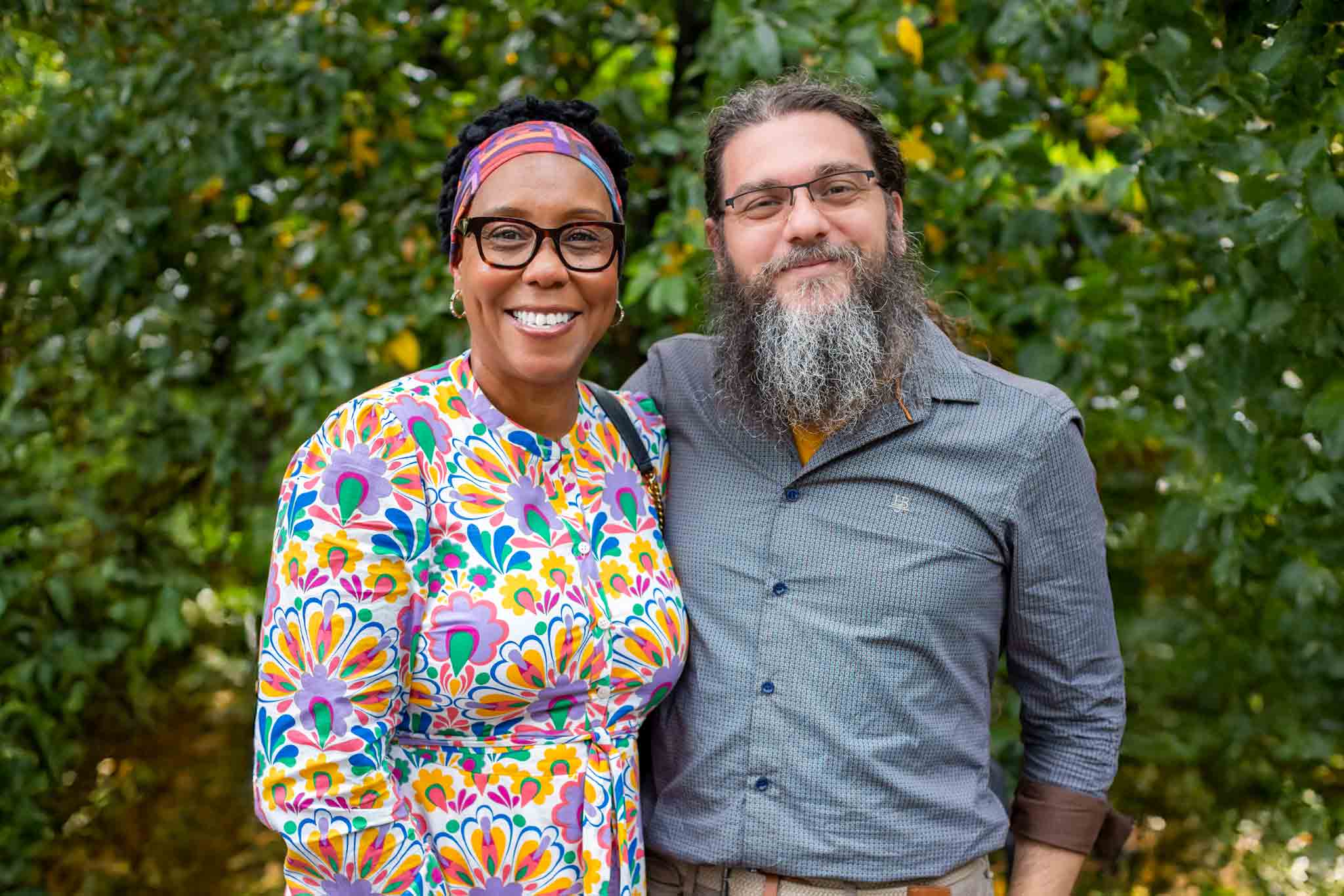
The London Transactional Analysis Conference (LonTAC), the first of its kind, brought together over 100 participants. Colleagues traveled from all parts of the UK and overseas (Spain, Serbia, Romania, and Switzerland), representing all levels of training, from trainees to seasoned Teaching and Supervising Transactional Analysts (TSTAs). That mix mattered. It meant the conversations were not confined to one training culture or professional identity.
As participants arrived, we felt both anticipation and vulnerability. The central question was whether our vision for an open, connected community would be received. Then, as interactions began, something beautiful happened. The connections were real.
There was a palpable warmth in the air, a quality of welcome that felt embodied rather than declared. The space itself seemed to communicate, "You are expected. You are wanted here." In the language of Transactional Analysis (TA), we could say the units of recognition, or "Strokes," were unconditional and generously exchanged. We were participating in an abundance of recognition, not a scarcity of it.
The energy was balanced and dynamic. We experienced Adult-to-Adult transactions flowing with spontaneity from the Free Child ego state and care from the Nurturing Parent ego state. There were no sharp ego-state hierarchies dominating the room. This feeling was grounded in the core TA Life Position of "I’m OK, You’re OK"—not as a slogan, but as a lived experience.
This atmosphere allowed professional roles to soften. Educators, therapists, trainees, and supervisors were not performing expertise; we were co-creating. For us, this carried particular depth. We know what it is to stand at the margins of professional spaces. To then stand at the center of a gathering we helped create, and to feel that center widen, was profoundly moving.
LonTAC felt less like fitting into an existing life script and more like rewriting one. We consciously interrupted old "Racket Systems" that equate authority with distance or competence with perfectionism. This involved stepping out of "Be Perfect" and "Please Others" Drivers, which are internal pressures described in TA, and into new permissions: to think, to feel, to differ, and to belong.
Workshops became spaces of discovery. Alongside the welcome, we met around substantive questions. Themes emerged throughout the day, including the role of Artificial Intelligence (AI), finding love in the modern era, neurodiversity in our practice, and the role of TA in the community. These threads appeared in workshops, keynote questions, and conversations, generating the richest dialogue of the day.
When the formal program ended, people did not rush to leave. Smaller circles formed, numbers were exchanged, and plans were made. The structure fell away, but the relatedness remained. The true measure of a gathering is not how perfectly it runs, but whether connection persists when control dissolves.
We experienced a collective script interruption. Many of us carry professional narratives about hierarchy, comparison, or exclusion. That day, those narratives loosened. Representation became more than visibility; it became a relational presence. We realized that our autonomy and our interdependence coexist.
The legacy of LonTAC is not simply that we met, but that we experienced who we can be when we dare to meet differently. We carry that experience home to our supervision rooms, our classrooms, and our therapy spaces.
We are already in conversation about LonTAC27. We aim to keep the late January date to maintain accessibility. The official theme will be "Sex, Riot, and Integration." To stay informed, you can join the mailing list on our website.
To ensure a productive and professional environment, we ask all members to adhere to the following principles:
🤝 Professional Courtesy
Engage with others respectfully. While debate is encouraged, personal attacks, aggressive language, and incivility are strictly prohibited. Focus on the topic, not the individual.
🎯 Constructive Contribution
Ensure your comments add value to the discussion. Avoid spam, off-topic remarks, or repetitive content. We prioritize quality discourse over volume.
🛡️ Safe Environment
Uphold the integrity of our community. Hate speech, discriminatory remarks, and harassment will result in immediate moderation. Help us maintain a secure space for all.





.jpg)









Lorem ipsum dolor sit amet, consectetur adipiscing elit. Suspendisse varius enim in eros elementum tristique. Duis cursus, mi quis viverra ornare, eros dolor interdum nulla, ut commodo diam libero vitae erat. Aenean faucibus nibh et justo cursus id rutrum lorem imperdiet. Nunc ut sem vitae risus tristique posuere.