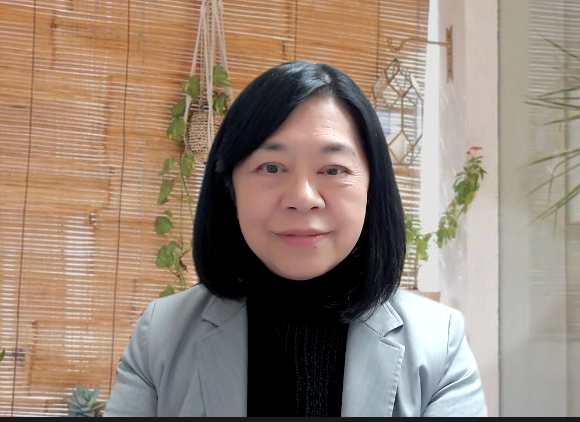

The following passage comes from a Japanese philosopher and writer.
The river never ceases in its flow —
yet not a single drop remains the same.
Bubbles gather in a quiet eddy,
only to burst and rise anew,
never holding one shape for long.
So it is with all who live in this world,
and the places they call home —
ever-changing, ever-passing (Kamo no Chōmei, 1212).
Every spring in Japan, cherry blossoms fill the streets with soft pink petals. They look the same each year, yet not a single blossom is identical. This reminds us that in our world, continuity and change always coexist.
As Transactional Analysis (TA) practitioners, we often encounter resistance when change is needed—in ourselves, in our relationships, and in our organizations. Humans naturally cling to what is familiar.
We may hear thoughts such as:
Yet, protecting what is truly important involves transformations quietly expressed in how we do what we do. With the key contributions of Anne Tucker and Alex van Oostveen, the ITAA Ethics Manual now uses more TA-aligned language. It is also available in HyperText Markup Language (HTML), a practical change by Rema Giridhar that improves global accessibility.
The ethical principles of the International Transactional Analysis Association (ITAA)—Responsibility, Protection, Empowerment, Commitment in Relationship, and Respect—form the unchanging foundation of our work. Precisely because these principles remain constant, changes in our practice become necessary as time, people, and environments evolve.
In the previous issue, Michelle reflected on the responsibility held by those with great influence. Because we have influence in the lives of those we accompany, we also carry a responsibility for the future—to ensure that their growth and support can continue, even when we are no longer present.
This connects not only with Responsibility but also with Commitment in Relationship and Empowerment, sustaining growth and connection beyond the “here and now.”
This perspective came into clearer focus for me through an article by Samiksha Jain (2022) in The Script, “Where There Is a Will, There Is a Way: Developing a Professional Will.” Jain describes a Professional Will as the preparation we make to ensure that clients, supervisees, and learners remain protected if we unexpectedly cannot continue our work.
While Samiksha Jain writes primarily from her position as a therapist, focusing on responsibility toward clients, her article invited me to extend this question into my own professional context as a TA educator.
Reading her work led me to reconsider my responsibility not only toward clients, but also toward trainees with whom I have contractual relationships, and participants in the courses and learning spaces I facilitate—particularly in considering how continuity of care and learning might be sustained should I myself become unavailable.
A Professional Will is more than administrative planning. It is an expression of Respect and Protection—a way of saying:“Your growth and well-being continue to matter, even if I cannot be here.”
Like the river in Chōmei’s reflection, relationships change yet continue, carrying life forward.
We exist as individuals, yet we cannot live without others. Our relationships do not end in the “here and now”; they receive a baton from the past and extend it into the future. This perspective brought a deeper awareness in me: dialogue not only connects people but also connects time.
Every “Hello” begins a transaction, and every “See you” hands it to the future.
This, too, is a form of ethical responsibility for those who hold influence.
How will you change so that what matters most can continue to thrive?
Jain, S. (2022, August). Where there is a will, there is a way: Developing a professional will. The Script, 52(8), 1–3.
Kamo no Chōmei. (1212). Hōjōki [An account of my hut].
To ensure a productive and professional environment, we ask all members to adhere to the following principles:
🤝 Professional Courtesy
Engage with others respectfully. While debate is encouraged, personal attacks, aggressive language, and incivility are strictly prohibited. Focus on the topic, not the individual.
🎯 Constructive Contribution
Ensure your comments add value to the discussion. Avoid spam, off-topic remarks, or repetitive content. We prioritize quality discourse over volume.
🛡️ Safe Environment
Uphold the integrity of our community. Hate speech, discriminatory remarks, and harassment will result in immediate moderation. Help us maintain a secure space for all.

Lorem ipsum dolor sit amet, consectetur adipiscing elit. Suspendisse varius enim in eros elementum tristique. Duis cursus, mi quis viverra ornare, eros dolor interdum nulla, ut commodo diam libero vitae erat. Aenean faucibus nibh et justo cursus id rutrum lorem imperdiet. Nunc ut sem vitae risus tristique posuere.








Join the Discussion