Life script method bridges continents, arts and social theory




Call her Marina. The name is invented. The story is not. It comes from clinical practice, and some details are withheld to protect her.
Marina is a psychologist of about 40. Her parents left her with her grandparents in a small town in the interior, where she grew up with so little care that even the water she drank was rationed. She was seriously abused there on at least two occasions. And she got out. She earned her degree, moved to the largest city in her region and joined a prestigious clinical organization. By every outside measure, she won.
Then an appliance breaks at home. The repair costs almost nothing, and she cannot bring herself to arrange it. Weeks go by. The same thing happens whenever she might buy something a little better for herself. She has the money and still cannot do it. The girl whose water was measured is still measuring what the woman is allowed to have.
Love follows the same course. Marina falls deeply for men at a distance, while imagination can still fill in who they are. Then they meet. The real man differs in some small way from the imagined one, often not even in an unflattering way, and her interest collapses on the spot. She never ends it gently. There is a rupture and a blocked number, and some time later another man at a distance.
A second story, equally real, belongs to a woman we will call Teresa, also a psychologist, old enough to be a grandmother. She has never been able to face what is unresolved between her and her husband. A new problem always turns up to be solved first, and the whole family is drafted into it. When things go wrong, the family is to blame. The cause is always someone outside her. It is, she reports, exactly how her own mother behaved. She can describe the pattern in her mother in detail and does not recognize it in herself.
Both women are trained to spot patterns like these in other people, and both are stuck in their own. Neither lacks intelligence or information. Each is still living by a conclusion she reached as a child, when it was the best answer available, and that conclusion goes on making her decisions a moment before she arrives at them.
Transactional analysis has a name for this: the life script. It is among the most complete ideas the field has produced, and perhaps the most demanding, because it refuses to stay inside one person’s head. A script is written in relationship and kept alive in relationship.
Two Brazilian women have spent more than four decades arguing, and showing, that relationship is also the only place a script can be rewritten. This is their story.
Two students and a question
Jane Maria Pancinha Costa was in her fourth year of medical school in southern Brazil when she signed up for TA 101, the introductory course in transactional analysis. She went in as a future physician and came out with a different map of her studies. The idea that caught her was the script. It was, she said, one of her passions from that first course.
Márcia Beatriz Bertuol arrived a little later and by another door. In 1979, in her first year of psychology at the Pontifical Catholic University of Rio Grande do Sul, she joined the transactional analysis movement before most of her classmates had settled on a theory to follow.
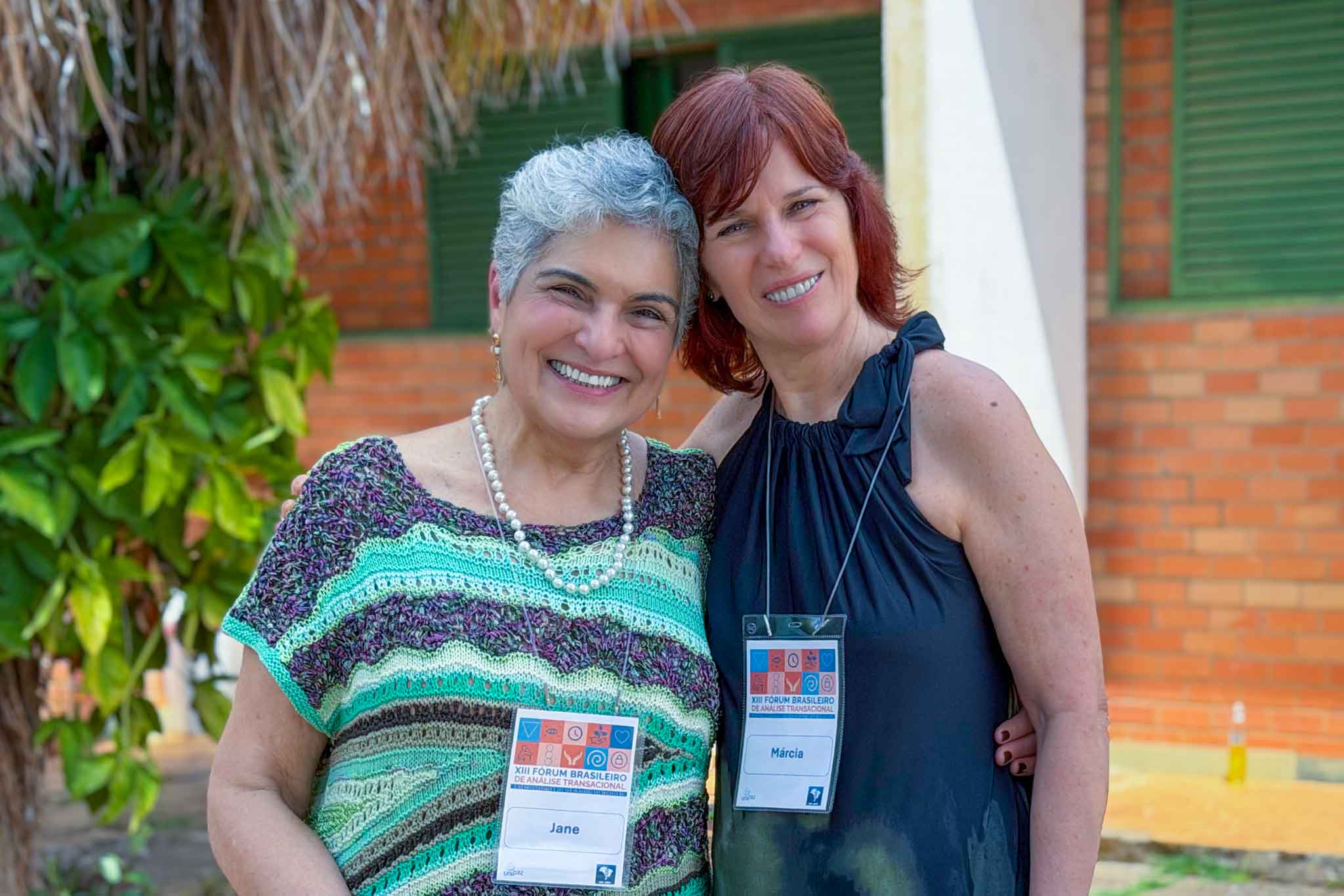
What brought the two into the same orbit was a group with an idealistic name and a practical purpose. GUSP, the Grupo Unido de Saúde Pública, or United Public Health Group, was a multidisciplinary team in Rio Grande do Sul shaped by transactional analysis. Costa was already a member. It grew, she said, out of a wish to join passion, ideology and concrete practice. Bertuol joined too. In 1980 the two met in Brasília, the same city where, decades later, they sat down with us during the 13th Brazilian Transactional Analysis Forum, held Aug. 27-29 by Unat Brasil, the national union of transactional analysts.
Bertuol’s interest in script began with a defeat. Her first practical experience was with a community and its public school. The team members were in their early 20s, worked intensely and expected to change the world quickly. Then the moment to decide would come, and people made the same old choices.
“I saw right there how hard it is to change,” she said.
The most direct answer transactional analysis gave her was that everyone has a life script.
“What is this script? Can it be changed?” she said. “That became the great question of my life.”
A first answer came at her first TA congress. There she heard Jacqui Schiff and her son Shea report that even severe psychosis and schizophrenia could be transformed, something her university taught was impossible. The Schiffs’ methods drew controversy then and afterward. What stayed with a young psychologist was the possibility, and it opened the way to joining transactional analysis to a clinical and social view of her work.
Costa took her own lesson from the same streets. For her, two lines of work have always run together: the life script and the relational side of the theory, in the tradition of Claude Steiner, with its attention to strokes, sources of power and emotional literacy. Living alongside the community showed the group how social and psychic structures hold each other in place. Without seeing the other as an individual and building trust, she said, there is no true relationship and no transformation.
“Firm individuality, love of oneself and of the other, and truth in the relationship are perhaps the main door to setting our script updates in motion,” Costa said.
Readers of The Script had been writing to us with the same advice: If the subject is script, talk to these two. One disclosure belongs here. One of us, Maku Almeida, attended their workshop years ago and credits it with a concrete turn in her own life.
A plan made before we could spell
The question Bertuol carried out of that school has a long history in the theory. Eric Berne, the founder of transactional analysis, described the script as a life plan settled in early childhood: how a person will live, whom she will marry, even the kind of ending she is heading for (Berne, 1972, as cited in Clarkson, 1992/2025). Small choices are left to reason. The large ones, he argued, have already been made.
Newcomers often hear this as a sentence. Clarkson (1992/2025) read it the other way. It is precisely because scripts are so predictable, she wrote, that they can be brought into awareness and decided again, the effect Goulding and Goulding (1979, as cited in Clarkson, 1992/2025) called redecision. For Clarkson the hard question was never whether people change. It was what kind of change they have actually made.
She counted five outcomes of therapy and gave each a myth (Clarkson, 1992/2025, pp. 32–43). Only one is cure: Odysseus, who comes home through hardship and is finally himself. The other four imitate it. Echo makes “progress” for years without moving, which is what a young Bertuol watched in that community. Icarus chases a change no human system can deliver. Medea is undone by a change she cannot bear. And Oedipus, the subtlest, believes he has outwitted his fate. Clarkson called this last one the counterscript cure: The client trades the parents’ commands for the therapist’s, behaves beautifully and falls back into the old ending the first time life leans on him.
Marina and Teresa show how little vocabulary protects anyone. Both are psychologists. Both can name what ails other people. Clarkson (1992/2025, p. 40) warns that even the language of transactional analysis can be recruited by the script, so that a person performs health fluently while the old ending waits.
Erskine et al. (1999/2024) explain why the pattern holds. Relational needs, they write, last from infancy to old age. When those needs go unmet for long enough, a person forms beliefs to the effect that no one is there for her, and those beliefs work as a defense against feeling the full pain of the need (Erskine et al., 1999/2024, p. 112). On this reading, a script is a form of protection, which is why nobody can simply be argued out of one.
An hour, a guitar and a sheet of yellow paper
Eleven years after they met, Costa and Bertuol built the workshop that made their names. It began with singing. At GUSP someone would pick up a guitar, a samba circle would form and the lyrics would turn into dramatic dialogues before anyone had planned it.
“Music is drama, emotion and fun,” Costa said. “It takes the focus off the Adult.”
One day in 1991 they decided to build a piece of work around it. They sat down, and the basic structure came out in about an hour. Bertuol calls it a “download.” They still keep the original, written on yellow paper. The first run was tested on about 22 friends she describes as brave, and the workshop, “Script: Recovering Your Life Trajectory” (“Resgatando Sua Trajetória de Vida”), has been held every year since. In the early years they telephoned around to borrow vinyl records and cassette tapes of the songs participants had chosen. Today everyone plugs a phone into the speaker.
The theory arrived after the intuition. When they went looking for the grounds of what they had invented, they learned that hearing is among the first channels to lay down long-term memory, beginning in the womb with the mother’s heartbeat and the baby’s own.
“It is the first thing we hear and the last thing we forget,” Bertuol said, noting that patients with Alzheimer’s disease still respond to music.
This matters for script work because the earliest decisions were never made in words. The workshop aims at the Child ego state, at the level the theory calls protocol and implicit memory, and a child does not reveal herself through rational speech. So the method goes around the Adult’s control, through songs and through posters assembled from images. Erskine et al. (1999/2024, p. 112) observe that relational needs mostly live outside awareness and surface only when they go unmet. A melody can reach them when a question would not.
The Parent in the room
Over the years the two clinicians noticed what the first workshop could not reach. It treated the Child. But the Child’s old decisions and survival strategies were being held in place by something else: the Parent ego state, the internalized voices of the people who raised us. Current theory, Bertuol said, treats Parent and Child as a constant relational unit in the psyche. One cannot be freed while the other is ignored.
So they built a second workshop, radically different in structure and aimed at the Parent. Its name states its ethic: “Honoring Ancestry and Overcoming Outdated Patterns of Behavior” (“Honrando a Ancestralidade e Superando Padrões Ultrapassados de Comportamento”). The verb is honoring. The workshop does not set out to defeat the ancestors. Together, the two workshops make up their approach to treating the life script.
The distinction answers the sharpest warning in Clarkson (1992/2025, pp. 39–42). In the counterscript cure, the client simply installs a new Parent, the therapist’s or the group’s, over the old one. The deeper message stays untouched and reasserts itself under stress. Clarkson (1992/2025, p. 42) illustrates it with a grim newspaper story: A man warned by his doctor that smoking would kill him quit, then choked to death on a piece of nicotine gum.
A method that works on the Parent directly, rather than supplying a better one, is attempting something else. It asks where the old commands came from, what they once protected and which of them have expired. Teresa, who can describe her mother’s habit of blaming everyone else and cannot see it in herself, is the kind of person such a workshop was built for.
Slow by design
From Robert and Mary Goulding, the creators of redecision therapy, the pair took two things: the theory of impasses and the premise of giving the Child a voice. The impasses they meet most often are of the third degree, where the Free Child and the Adapted Child are at odds at an almost existential level. These are older and more structural than the conflicts a person can readily name.
That is why nothing in the method hurries.
“Nobody wakes up one day and declares the script overcome,” Costa said.
Deconfusion, as the theory calls it, is a process. Participants are told not to touch the material they produce for at least three weeks. It has to rest. After that it goes to psychotherapy, and psychotherapy is a condition of entry: Each participant must be in treatment or have access to it and must have an Adult solid enough to hold what the Child brings up.
Read next to Clarkson (1992/2025), these rules look like a direct reply to her account of what goes wrong. She describes what the literature calls the therapeutic casualty, the person left worse off because defenses were removed without protection, skills and resources arriving at the same time, usually through badly timed interventions or chaotic planning (Clarkson, 1992/2025, p. 38). She also warns against premature redecisions that are not grounded in the whole of a person’s life (p. 42). Her test of real cure is plain: It holds under stress, ordinary and extreme (p. 34). A three-week silence and a therapist waiting at the other end are how a workshop takes that test seriously.
The same answer, from the other side of the world
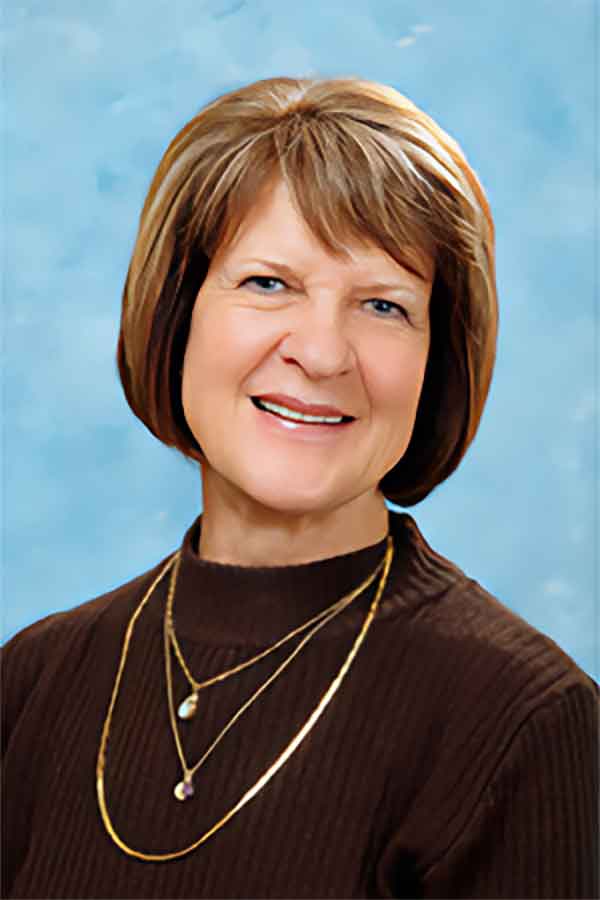
The redecision tradition that Costa and Bertuol draw on has a living witness. Linda Gregory has been a Teaching and Supervising Transactional Analyst for more than 40 years. Born in the United States, she moved to Australia in her 20s and lives near Perth. In the 1980s she spent a month in California training with Robert and Mary Goulding themselves.
The first transactional analysis book she ever read was theirs, “The Power Is in the Patient” (Goulding & Goulding, 1978), and it set the course of about 50 years of work. What caught her was the claim in the title: People can do the changing, rewrite the script and make new decisions. Today she teaches redecision mostly online, to transactional analysis schools in Russia, Serbia and China.
In a separate interview with The Script, Gregory was asked what matters most when a script is rewritten. She began where the Brazilian workshops begin. The person first has to become aware of the script that keeps her stuck, she said, and then has to want to change it. Only then can a therapist help, and the help starts with respect for the child who made the decision.
“You wrote that early decision when you were young,” she said, speaking as the therapist would. “You did it for a very good reason.”
The early decision was usually a survival tactic, Gregory said, a way to get along with the grown-ups, and it was smart at the time. The adult can then see that it no longer works and choose again.
The convergence is hard to miss. On two continents, clinicians formed by the same tradition describe the early decision in nearly the same words, and none of them blames the child. Marina’s inability to spend on herself and Teresa’s search for someone to blame were once solutions.
Including the other, beginning with the one inside
At the center of the work is a concept the two call self-empathy. The Adult a person is today turns toward the Child that person was and tries to understand what led her to decide as she did in order to survive.
“Listening with love is essential so that we do not repeat, inside ourselves, the oppression of the original relationship,” Costa said.
It is harder than it sounds. Offering empathy to oneself, Bertuol said, is more difficult than offering it to anyone else. The group helps. Someone merciless with himself listens to a colleague’s painful story and thinks: If it was that hard for her, it was hard for me too. They call this effect the Invisible Maestro, because the stories in the room always end up speaking to one another.
Erskine et al. (1999/2024, p. 113) would recognize the mechanism. Lasting damage, they argue, comes less from trauma itself than from the absence of a healing relationship during or after it, one in which a person’s needs are recognized and answered. The workshop supplies that relationship twice over, among the participants and within each of them.
A philosopher who never wrote a line about script helps explain why this goes so deep. Habermas (1996/2018, p. 349) argues that people become individuals only through their relations with others and that a person’s integrity depends on mutual recognition staying intact. He was writing about constitutions and minorities, so the application to the consulting room is ours. But his definition of autonomy fits it with surprising precision. People are free, he says, only when those who live under the rules can also understand themselves as their authors (Habermas, 1996/2018, p. 348).
A script is a set of rules that someone else wrote for us before we could object. On this reading, cure is the passage from addressee to author. It also explains what is wrong with the counterscript cure, which Habermas would call paternalism: A kinder authority writes better rules, and the person remains their addressee.
His warning about well-meant help applies as well. Interventions that “normalize” people, he writes, turn compensation into a new form of discrimination (Habermas, 1996/2018, p. 351). Clarkson (1992/2025, p. 37) says the same of therapy when she refuses to force anyone toward a statistical idea of the healthy. And where Habermas (1996/2018, p. 354) notes that under dominant definitions some needs cannot even be put into words, Costa and Bertuol answer with a practice. They give the Child a voice.

This is the conviction Costa brought home from the community work of her youth, now turned inward. The first other to be included is the one inside. Self-empathy is recognition extended to a child who was never asked, such as a girl whose water was measured. The rest may follow from it. It is hard to welcome a real man across the table while the real girl one used to be is still unwelcome.
What gets handed on
Asked whether they grasp their influence on the transactional analysis community, the two answered in character.
“Sometimes we get flashes of it,” Costa said.
Bertuol said she finds it hard to measure. She is introspective by temperament, and the world where she moves at ease is the consulting room, with her client. Being invited to open the forum affected her deeply. The attention from outside still surprises her.
The attention has consequences, though, and they have accepted them. Realizing that the method could leave with them, they created a training program in script psychotherapy. It teaches the approaches they developed for the Child and for the Parent, and a third movement, directed at the Adult ego state, is now taking shape. More than three decades after the yellow sheet of paper, other hands are learning to lead the workshops.
What those successors inherit is, in the end, a stance toward the past. Costa put it last, and we give her the last word too. The first survival strategy, she said, guaranteed our existence. It has simply gone out of date. Once a person can accept that, the fear of losing who they are falls away.
“We lose nothing,” she said. “We go on being ourselves, and ever more faithful to our true essence.”
Clarkson (1992/2025, p. 37) made the same point in the language of theory: Script changes how we are, not who we are. Odysseus, her image of cure, does not come home as someone else. He comes home and is recognized.
Footnotes
References
Clarkson, P. (2025). Psicoterapia em análise transacional: Uma abordagem integrada [Transactional analysis psychotherapy: An integrated approach] (C. S. da Silva, Trans.). Editora Autonomia. (Original work published 1992)
Erskine, R. G., Moursund, J. P., & Trautmann, R. L. (2024). Além da empatia: Uma terapia de contato-no-relacionamento [Beyond empathy: A therapy of contact-in-relationship] (C. S. da Silva, E. L. Ferreira, M. I. G. de Almeida, & T. M. Cunha, Trans.). Editora Autonomia. (Original work published 1999)
Goulding, R. L., & Goulding, M. M. (1978). The power is in the patient: A TA/Gestalt approach to psychotherapy. TA Press.
Habermas, J. (2018). A inclusão do outro: Estudos de teoria política [The inclusion of the other: Studies in political theory] (D. L. Werle, Trans.). Editora Unesp. (Original work published 1996)
Cite this article (APA 7)
Loading citation…